Sharpening Occam's Razor
Cut to the truth in your life.

You’ve probably heard some versions of the following: less is more, simple over complex, don’t be precisely wrong.
You probably haven’t heard of what all these elude to. All relate, fallaciously or not, to—Occam’s Razor.
In philosophy, a razor is a rule of thumb or principle you can use to eliminate unnecessary information or explanations about some phenomenon.
Occam’s Razor is one of the more popular razors.
Occam’s razor states, among competing hypotheses, the one with the fewest assumptions should be selected.
Why? Fewer variables equal simpler. Simple is easier to test. Simple is easier to falsify.
William of Ockham originally said it as:
“pluralitas non est ponenda sine necessitate”
“plurality should not be posited without necessity”
- William of Ockham
Let’s flesh this out.
Assume a variable has some likelihood of being true.
Wouldn’t it then follow that the more variables introduced to a hypothesis decrease the overall likelihood of said hypothesis being true?
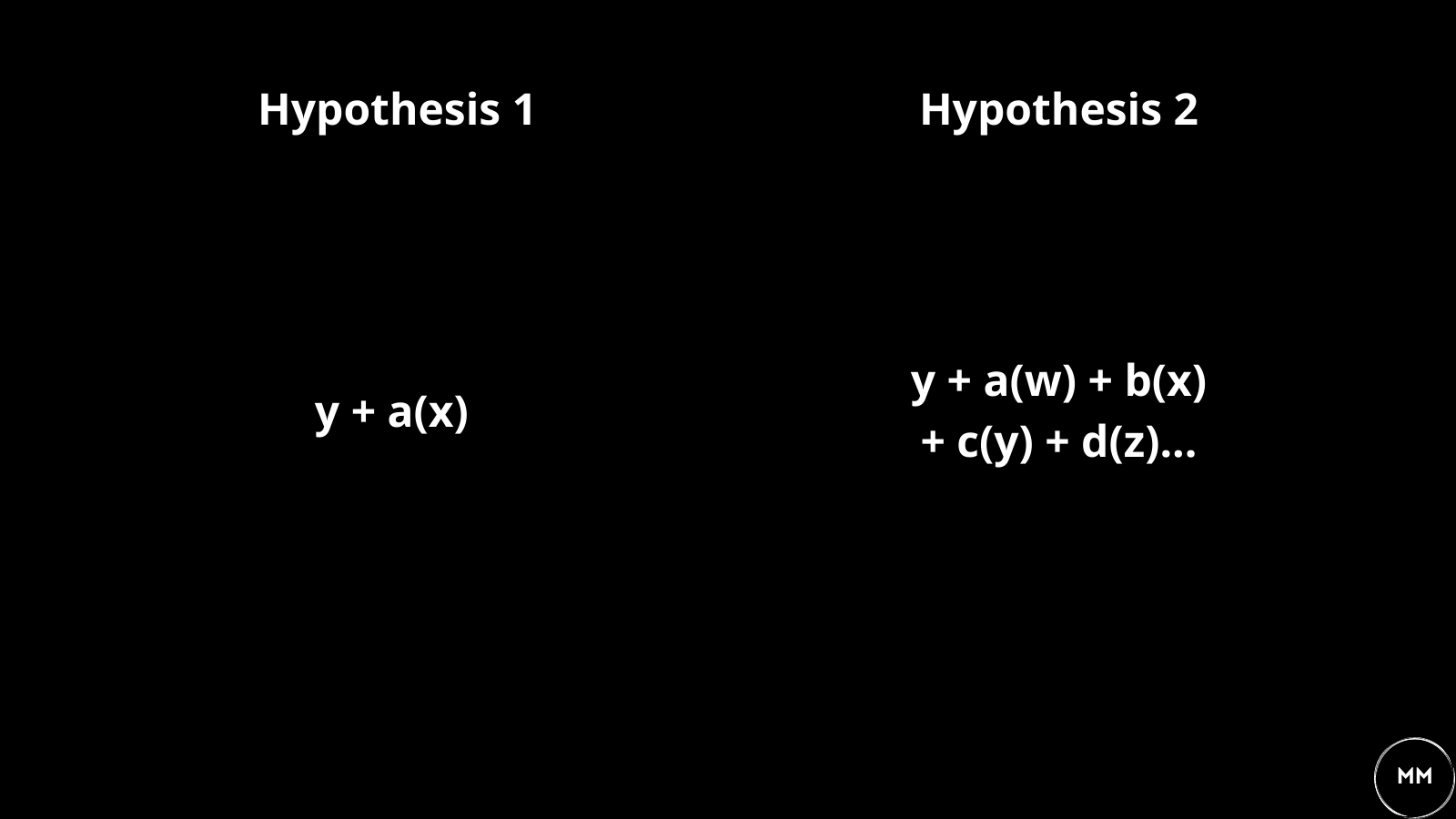
The more variables there are the wider the array of outcomes or solution set.
What is the actual math?
That can get rather dry rather quickly; however, in David Mckay’s information theory work we see a nice visual representation of Occam’s Razor.
Below, the dashed line represents the probability a simple hypothesis is true while the solid line represents that of a more complex hypothesis. The x-axis is the problem space.
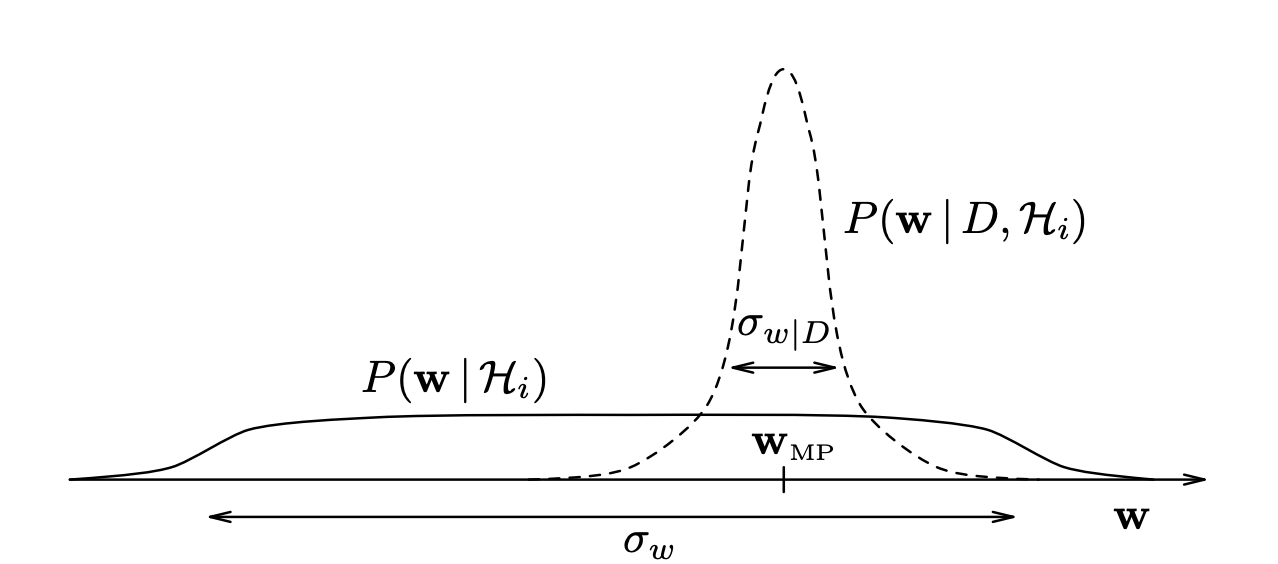
In this model, both hypotheses have a probability of one; the more complex hypothesis is simply spread out while the simpler hypothesis is concentrated.
Where the complex and simple hypotheses compete, see the overlap, the simple hypothesis wins in terms of probability.
Practical Implications
While seemingly rather abstract, using Occams razor can help cut to the truth in life faster.
Let’s review an example.
Two young women walk by. One girl, seemingly flustered, asked, or rather stated, to her friend, “Why is he not responding?”
While there are obviously many possibilities. Let’s use Occam’s razor on two.
Hypothesis 1: Maybe he encountered a rogue kangaroo that stole his phone leaving him stranded under the sweltering Australian outback sun.
Hypothesis 2: Maybe his phone died.
Perhaps our new mystery friend should make a trip to the Outback? No..
Occam’s Razor seems obvious when scenarios are made this absurd. Yet, in real life, we often think hypothesis 1, or some watered-down version of it, might be worth considering. After all—it is possible, we tell ourselves.
While complex scenarios are possible we should start by first considering the simple scenario.
Takeaways
Be cautious in applying Occam’s Razor; while it is a useful mental model, it is easily and often misunderstood and misused.
It should not be used to justify ignorance.
It is often misinterpreted that Occam’s Razor states simple explanations are more likely to be correct. Really, Occam’s Razor is meant to be a starting point about which hypothesis, or idea, to select to pursue.
Remember, oftentimes right is simple but simple is not always right.
Occam’s razor is a tool to determine where and how to start an investigation vs how to conclude one.